As I write this report I took some time to ponder on the role of a journalist, specifically how rural communities can benefit from having access to the services of a journalist. A journalist can be defined as a person who is responsible for the collection and dissemination of news or information. Improvements in technology have led to an increase in the availability and consumption of media, yet there is a danger that much of the information being distributed might underline hidden agendas and lead to an increase in misinformation. Journalists by definition must remain unbiased in their views and submit content that is based on a strong sense of ethics. All to often as of late we are seeing an increase in one sided and even deliberate misrepresentation of facts to promote certain agendas. An increase in misleading information can have a real devisive affect on public opinion and a good journalist recognizes this and strives to present proper representation of facts.
One can only achieve this goal if given the opportunity and quite often there are little or no opportunities to practice this craft in remote and rural areas. The hard costs associated with engaging the services of a journalist can be a prohibitive factor for small communities. As a result there are many instances where these areas remain underserved. Economic development can be negatively impacted when there is no voice which represents the concerns of rural communities. The Local Journalism Initiative allows for the hiring of a journalist based on the premise that “A free and independent press is essential to a healthy democracy.” (Canadian Heritage news release, October 20,2022).
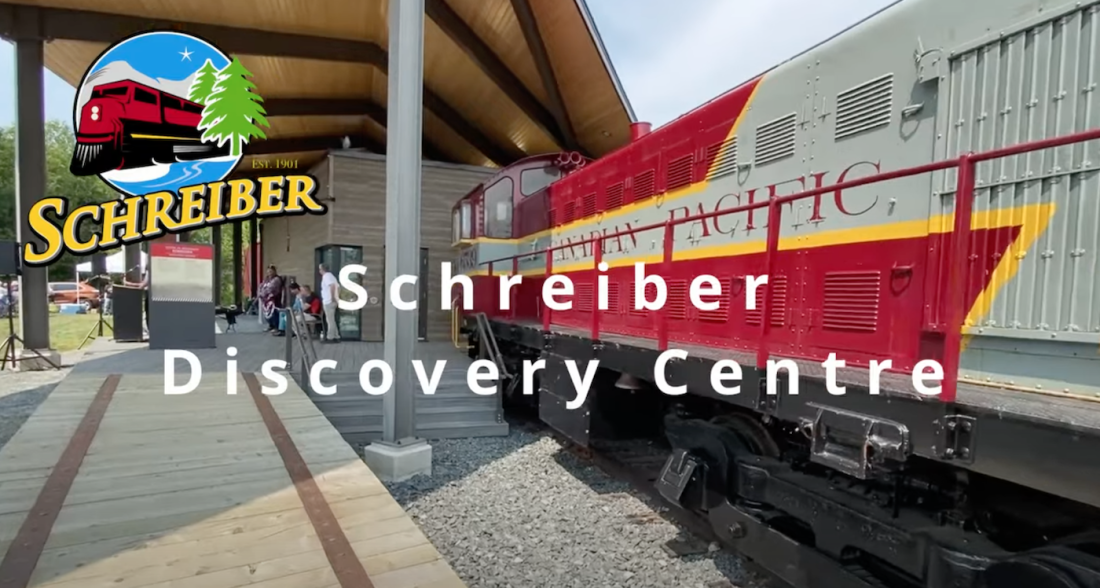
When Schreiber Media Centre started out in January of 2020 there was no clear path for us to follow. We were essentially trailblazing in a co operative agreement with the Schreiber Public Library under their media literacy initiative. The library has always been a cultural hub and safe space for residents of the town. The library is also involved with many other committees and organizations in Schreiber and it seemed a perfect fit to partner with an organization that not only originates programming but keeps its finger on the pulse of the goings on in town. Having a media centre in the basement of the library has had many benefits, including preserving the towns heritage and promoting our area to others in an effort to increase opportunities for economic development. Our coverage of civic events and municipal meetings in both Terrace Bay and Schreiber has led to a better understanding for residents of just how municipal decisions are made. Lately there has been an interest in Schreiber Media Centre providing coverage of even more events and issues of public health and safety. SMC has been a huge supporter of the local weekly newspaper, Terrace Bay-Schreiber News, in an effort to increase public perception of the importance of community newspapers. Awareness of our community and its concerns has reached an audience that goes beyond our municipal borders. None of this would have been possible without the support of Cactus Media and the LJI programme. It is hoped that the federal government continues to recognize the impact that this programme has had on giving voice to previously unheard and almost invisible communities in rural areas across the country.
Add new comment
About LJI
LJI Impact is the section of commediaportal.ca where the journalists and their organizations participating in CACTUS' Local Journalism Initiative can share their greatest successes.
Through the written stories, photos and videos you see in the LJI Impact section, you'll be able to read first hand accounts about how the presence of a community journalist is making a difference in communities across Canada through the Local Journalism Initiative and the Community Media Portal.
The Community Media Portal is a gateway to the audio-visual media created by community media centres across Canada. These include traditional community TV and radio stations, as well as online and new media production centres.
Community media are not-for-profit production hubs owned and operated by the communities they serve, established both to provide local content and reflection for their communities, as well as media training and access for ordinary citizens to the latest tools of media production, whether traditional TV and radio, social and online media, virtual reality, augmented reality or video games.
The Community Media Portal has been funded by the Local Journalism Initiative (the LJI) of the Department of Canadian Heritage, and administered by the Canadian Association of Community Television Users and Stations (CACTUS) in association with the Fédération des télévisions communautaires autonomes du Québec (the Fédération). Under the LJI, over 100 journalists have been placed in underserved communities and asked to produce civic content that underpins Canadian democratic life.