

- Mettre en route la vidéo
- Cliquer sur l’icône « CC » (Sous-titre) en bas à droite
- Cliquer sur l’icône « Settings » (Paramètre) en bas à droite
- Cliquer sur «Subtitles » (Sous-titres)
- Cliquer sur « Auto-translate » (Traduire automatiquement)
- Sélectionner la langue de votre choix
After 30 Years in Uniform, Sergeant Scott MacKenzie Retires With a Legacy of Community First
www.youtube.com/watch?v=hqOXu6QggNU&list=PLkQ2shlS7zI2F17YXHvm3OZLA6HlG-0mR
As Sergeant Scott MacKenzie prepares to retire from the Royal Canadian Mounted Police, he leaves behind more than three decades of public service—and a community that has come to know him not just as a Mountie, but as a neighbour, coach, and friend.
MacKenzie’s career began with a childhood spark. “It started, I think, in junior high,” he recalled in an interview for Southwest Magazine with host Vicki Hogarth on CHCO-TV, crediting a family friend in the RCMP with inspiring his path. After completing his post-secondary education in Nova Scotia and RCMP training in Montreal and Regina, MacKenzie arrived in St. Andrews in January 1994. He’s remained in Charlotte County ever since.
Over 30 years, MacKenzie has watched the role of rural policing transform dramatically. When he started, revolvers and handwritten reports were standard; today, officers carry pistols, and calls are dispatched directly to laptops inside patrol cars. “All our calls are dispatched directly to the computers in the cars like you would see on TV,” he said. While technology has brought efficiencies, it has also introduced new challenges—from online scams to a shifting landscape of drug enforcement.
But one challenge remains unchanged: distance. “The issue for rural policing is just geography,” MacKenzie explained. Serving a region as vast and dispersed as Charlotte County requires striking a balance between the urgency of emergency calls and the realities of long travel times and limited staff resources.
What distinguished MacKenzie’s career, however, wasn’t just his professional adaptability—it was his investment in the people he served. Whether coaching minor hockey, attending local festivals, or visiting schools, he made it a priority to show up in the community as more than a uniform. “It is important to be connected to the community,” he said, “to not only be Scott, the Mountie, but Scott, the neighbour, Scott, the coach, Scott, the friend.”
His presence in schools helped redefine the image of police for local youth. “Having the opportunity for them to meet a police officer, know a police officer on a personal level—to realize that we're humans too—that’s important,” he said. It’s this kind of community policing, rooted in everyday presence and trust, that MacKenzie believes makes a lasting difference.
As retirement approaches, he says it’s the people he’ll miss most: colleagues in the RCMP, students, parents, and the countless individuals he’s crossed paths with over three decades. He doesn’t plan to disappear—he hopes to volunteer and is considering serving in the RCMP’s reserve program.
Sergeant Scott MacKenzie’s retirement marks the end of an era for Charlotte County. But the legacy he leaves—a model of public service grounded in empathy, visibility, and community connection—will resonate for years to come.
Ajouter un commentaire

La télévision du comté de Charlotte est la seule source de télévision communautaire indépendante du Nouveau-Brunswick. Depuis 1993, CHCO-TV fournit au sud-ouest du Nouveau-Brunswick du contenu produit localement par la communauté qu'elle dessert.
La mission de CHCO-TV est de promouvoir les médias communautaires et d'encourager, d'éduquer et d'engager les résidents du sud-ouest du Nouveau-Brunswick, d'utiliser les nouveaux médias et la technologie, d'améliorer la participation civique, d'acquérir de nouvelles compétences médiatiques et d'améliorer la culture, l'économie, la santé et qualité de vie au Nouveau-Brunswick.
Médias récents
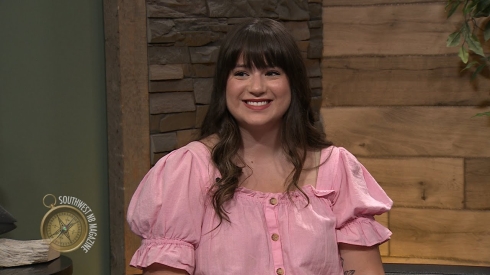
From Illness to Action: A Family’s Story Sparks a Community Movement
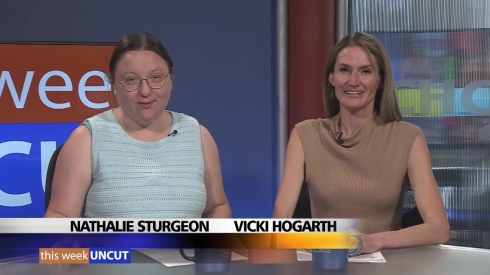
This Week Uncut on CHCO-TV: September 15-21, 2025
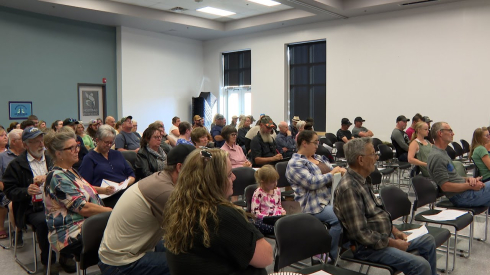
Residents Voice Concerns Over St. Stephen’s Draft Zoning Bylaw Z-4
Commentaires
Nous encourageons les commentaires qui favorisent le dialogue sur les histoires que nous publions. Les commentaires seront modérés et publiés s'ils respectent ces lignes directrices:
Le portail des médias communautaires se réserve le droit de rejeter tout commentaire ne respectant pas ces normes minimales.