

- Start playing the video
- Click CC at bottom right
- Click the gear icon to its right
- Click Subtitles/CC
- Click Auto-translate
- Select language you want
Voices of Resilience: A Bahá'í Perspective on Migration and Community in Canada
Many Iranian immigrants have been forced to leave their homeland due to their religious beliefs. The Bahá'í community, in particular, has suffered significantly because the Islamic government in Iran does not recognize the Bahá'í faith and creates ample opportunities for harassment and persecution of its followers.
The province of British Columbia in Canada has been a welcoming destination for many Bahá'ís escaping the severe oppression in Iran, seeking to preserve their faith and way of life. Tonight, we converse with one of these Bahá'í citizens, Bahram Tahririha.
Bahram expresses the universal desire among Bahá'ís to live in their homeland, but the pressures imposed by the Iranian government have forced many to flee for their lives. He appreciates Canada's commitment to human rights and religious diversity, noting that Canada has embraced the Bahá'í community, which advocates for peaceful, tranquil coexistence.
Having lost many family members and friends in Iran, Bahram has been living in Canada for about thirty-five years. He is asked whether a Bahá'í individual can accept Canadian civil laws, given that some of these laws, such as accepting gender diversity, may not align with Bahá'í teachings.
Bahram explains that the Bahá'í Faith does not interfere with politics and, while it recognizes marriage between a man and a woman, it does not advocate for changing laws. He is questioned whether abstaining from politics might pose challenges for Bahá'ís in major societal decisions like elections in Canada. Are they discouraged from participating?
Bahram clarifies that Bahá'ís follow the guidance of their local councils, each consisting of seven members, who provide voluntary services to Bahá'ís in various cities, determining their political stance. Despite this, there have been no protests or will be any protests from Bahá'ís, even after protest movements in Iran. Isn't this lack of protest contradictory to their citizenship rights?
Bahram responds that Bahá'ís have not engaged in protests thus far and always seek to resolve issues through dialogue and peaceful means. The discussion mainly revolves around social rights in British Columbia and the challenges faced by Bahá'í followers due to their political non-involvement.
In conclusion, Bahram suggests that some of these questions would require discussions with higher authorities or members of the seven-member council.
Guest: Bahram Tahririha
Journalist: Majid Mahichi
Skyrise Media Society
Add new comment

Skyrise Media is committed to reflecting the diversity and richness of the local community by providing programming in multiple languages and covering a wide range of topics in greater Vancouver.
Recent Media
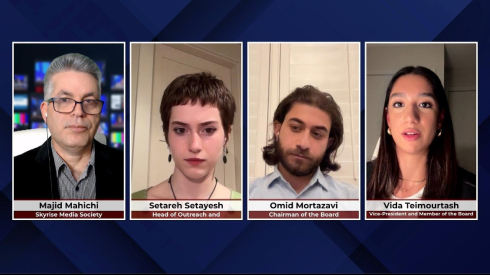
Students Build a Bridge to Hope: UBC Club Launches Simorgh Foundation for Iranian Education

Teen Voices: A Call for Safer Public Spaces in Vancouver

From Immigrant Struggle to Community Cornerstone

We encourage comments which further the dialogue about the stories we post. Comments will be moderated and posted if they follow these guidelines:
The Community Media Portal reserves the right to reject any comments which do not adhere to these minimum standards.